
 Send Email
 18929582815


Inside the Technology: How INCODE Builds Print Stability for High-Speed Production
Modular Architecture: Why Incode Divides Intelligence Into Three Boards
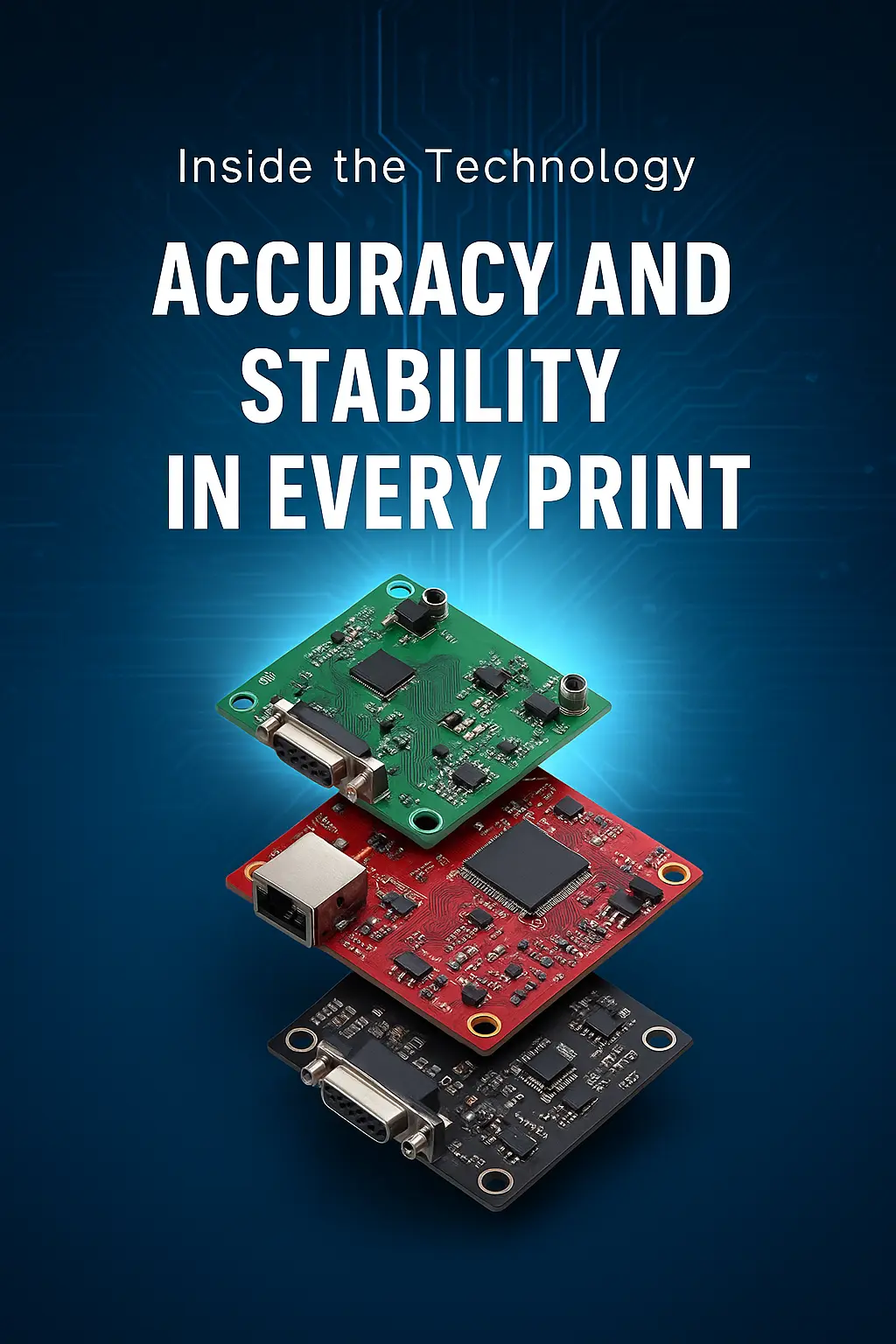
At the heart of INCODE’s design philosophy is a modular control system made up of three dedicated components:
1. Green Board — Display Driver Board
Handles the UI and ensures the screen remains responsive even during complex print jobs.
2. Red Board — Data Processing Core
Acts like the internal computer. It manages variable-data generation and real-time code formation.
3. Black Board — Printhead Control Board
The board that ultimately governs droplet firing, current timing, and output regulation.
By separating these functions, INCODE reduces cross-interference and improves internal timing accuracy.
This design also simplifies troubleshooting—one of the reasons why INCODE’s maintenance cases can be resolved faster than many competing models.
Synchronizing the Print Signal: The Hidden Key to Stability
Much of INCODE’s stability comes from its timing algorithm, built after thousands of hours of field testing.
The system continuously analyzes:
-
conveyor speed
-
sensor response duration
-
material spacing
-
required character width
Then it adjusts the firing sequence so the printed image maintains its correct proportions.
This means that even if the conveyor suddenly slows—or briefly accelerates—the printed result stays identical.
Internal test data from INCODE’s evaluation center shows:
character deformation stays within 0.2 mm per meter, a benchmark seldom reached in compact TIJ systems.
Protection Against Real-World Problems: Static, Ink Feedback, and Nozzle Stress
Earlier versions of industrial printers across the market often struggled with static discharge and ink feedback during clogging events.
INCODE responded by:
-
adding multi-level power isolation
-
redesigning anti-static pathways
-
strengthening printhead current protection
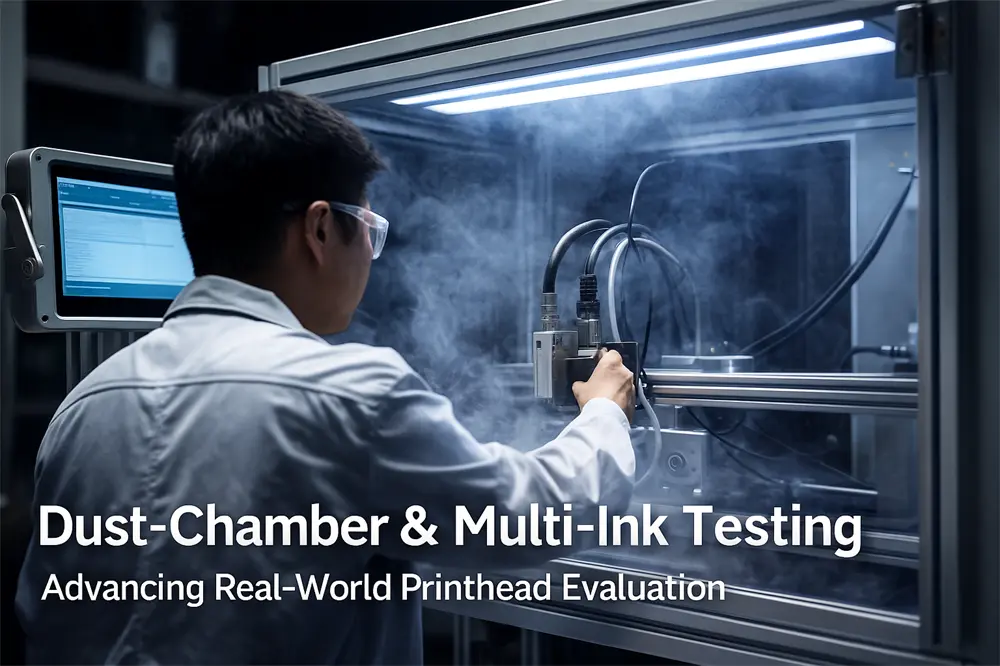
These improvements have reduced board-related failures significantly, especially in dusty factories and high-humidity workshops.
R&D Technician Zhang Rui shared a simple insight:
“A stable print isn’t only about accuracy—it’s about resilience. The machine must keep going even when the environment isn’t ideal.”
Designed for the Fastest Production Lines
INCODE printers undergo continuous testing at maximum rated speed, simulating real-world conditions found in beverage plants, cable factories, and high-volume food packaging.
The result:
-
consistent print density
-
minimal character drift
-
better spacing stability
-
reduced risk of overlap or stretching
This gives manufacturers the confidence that production speed will not compromise traceability.
Looking Forward: Smarter Synchronization and Data-Based Optimization
INCODE’s next step is integrating adaptive algorithms that will automatically calibrate timing based on real-time feedback from sensors and motion data.
The goal is to create a printing system that doesn’t simply follow the line—but learns from it.
As an INCODE spokesperson summarized:
“Print stability is not a static achievement. It evolves with the line, the environment, and the industry. And so do we.”